

Interference Injuries in Horses

Introduction
Interference injuries in horses represent a complex and multifactorial challenge within farriery, requiring a detailed understanding of equine biomechanics, limb conformation, hoof balance, and the dynamic interaction between the horse and the ground surface (Wilson et al., 2001). These injuries are not simply incidental occurrences but are often the outward manifestation of underlying imbalance, inefficiency, or conformational predisposition (Chateau et al., 2006). The farrier, therefore, must approach interference not merely as a superficial problem but as a diagnostic indicator of deeper biomechanical dysfunction. Through careful observation, methodical assessment, and precise farriery intervention, it is possible to significantly reduce both the incidence and severity of interference injuries while improving overall locomotor efficiency (van Heel et al., 2005).
Prefer an audio version? Click below to listen to the podcast.
Types of Interference Injuries
Overreach is one of the most frequently encountered forms of interference and typically involves the hind foot striking the heel bulbs, coronet band, or shoe of the forelimb on the same side (Weller et al., 2006). This occurs most commonly during the transition from stance to swing phase in the forelimb when breakover is delayed and the hindlimb advances more rapidly than the forelimb can clear the ground (Clayton, 2002). The resulting injury may range from mild bruising of the heel bulbs to severe lacerations and avulsion of the hoof wall. In performance horses, particularly those engaged in fast work such as eventing or racing, overreach can lead to significant disruption of training and competition schedules (Parkin et al., 2004). The presence of pulled shoes, damaged heels, or repeated trauma to the same area should alert the farrier to an underlying timing issue within the stride.
Forging is closely related to overreach but differs in that the toe of the hind foot strikes the solar surface or shoe of the forefoot rather than the heel (Roepstorff et al., 1999). This produces a characteristic metallic clicking sound during movement and is often more noticeable at the trot. Forging indicates a lack of synchronisation between the forelimb and hindlimb, typically resulting from delayed breakover in the forelimb or excessive impulsion from the hindlimb (Back et al., 1995). Horses that forge may not always show visible injury, but the repeated impact can lead to shoe wear, displacement, and eventual lameness if left unaddressed.
Brushing, also referred to as interfering, occurs when one limb strikes the inside of the
opposing limb during movement (Crevier-Denoix et al., 2001). This is most commonly seen in the region between the fetlock and the knee in the forelimbs or between the fetlock and the hock in the hindlimbs. Mild cases may present as hair loss or superficial abrasions, while more severe cases can result in open wounds, swelling, and infection (Dyson et al., 2003). Speed cutting represents a more severe form of brushing, typically occurring at higher speeds when the limb flight becomes exaggerated or uncoordinated. Horses that brush repeatedly may develop thickened skin or scar tissue, which can further alter limb flight and perpetuate the problem.

Tripping and stumbling are indicative of dysfunction in the breakover phase of the stride. Horses that trip frequently may exhibit delayed toe off, often associated with long toes, low heels, or insufficient muscular coordination (Murray et al., 2006). This not only increases the risk of interference injuries but also places additional strain on the flexor tendons and associated structures. Persistent tripping should always be investigated thoroughly, as it may indicate underlying pathology such as navicular syndrome or neuromuscular weakness (Eliashar et al., 2004).
Toe drag in the hindlimb is characterised by excessive wear at the dorsal aspect of the hoof wall and is often associated with reduced hock flexion or fatigue (Johnston and Back, 2006). This condition reflects an inability of the horse to adequately lift and advance the limb during the swing phase, resulting in dragging of the toe along the ground. Toe drag is frequently observed in horses with poor hindlimb engagement or those recovering from injury and can predispose to further interference through disruption of normal stride timing.
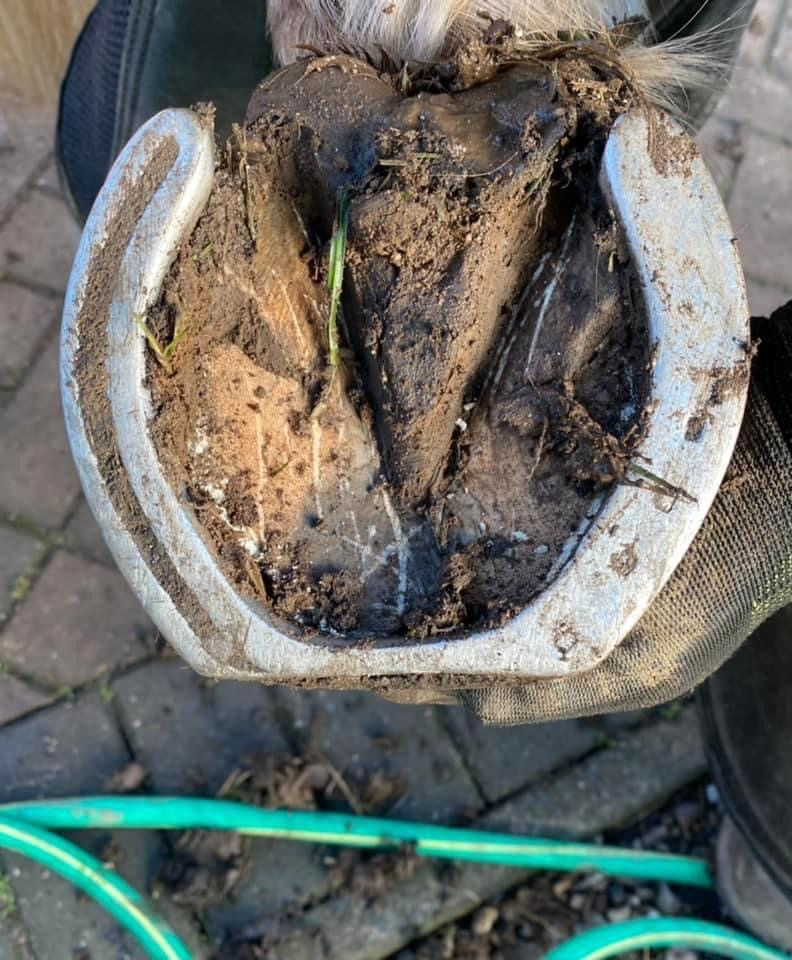
Slipping represents a loss of traction during the stance phase and can occur on a variety of surfaces, particularly when the hoof or shoe does not provide sufficient grip (Chateau et al., 2009). While not strictly an interference injury, slipping can lead to compensatory gait alterations that increase the likelihood of limbs striking one another. Horses that slip regularly may become tense or hesitant in their movement, further exacerbating biomechanical inefficiencies.
Static Assessment of the Horse
The static assessment forms the foundation of any farriery examination and provides critical insight into the structural alignment and balance of the horse (van Heel et al., 2005). The horse should be positioned squarely on a firm, level surface, with equal weight distributed across all four limbs. The farrier must evaluate the horse from multiple perspectives, including frontal, lateral, and posterior views, to identify any deviations from ideal conformation.
Particular attention should be paid to the alignment of the limbs relative to the body. In the forelimb, a straight line should ideally be observed from the point of the shoulder through the centre of the knee and down to the hoof. Deviations such as toe in or toe out conformation can significantly influence limb flight patterns and predispose to interference (Weller et al., 2006). The hoof itself must be assessed for mediolateral balance, with the coronary band appearing level and the hoof walls of equal height on both sides. Any imbalance in this plane can result in uneven loading and altered breakover (Clayton, 2002).
The hoof pastern axis is another critical parameter, representing the alignment between the dorsal hoof wall and the pastern (Chateau et al., 2006). A broken forward or broken back hoof pastern axis can disrupt the timing of breakover and contribute to forging or overreach. The farrier must also assess hoof capsule distortion, including flaring, dishing, or asymmetrical growth patterns, all of which can influence the mechanics of the limb.
Palpation of the limbs should be conducted to identify any areas of heat, swelling, or sensitivity. Chronic interference injuries may present with fibrotic thickening or scar tissue, while acute injuries may show signs of inflammation (Dyson et al., 2003). The condition of the skin, hair coat, and underlying structures provides valuable information regarding the duration and severity of the problem.
Dynamic Assessment of the Horse
Dynamic assessment is essential in identifying the functional aspects of interference and involves observing the horse in motion under a variety of conditions (Back et al., 1995). The horse should be walked and trotted in a straight line on a firm surface to assess limb flight, stride length, and foot placement. The farrier must observe from the front, side, and behind, noting any deviations from normal movement patterns.
At the walk, the emphasis is on rhythm and symmetry, while at the trot, the increased speed allows for clearer identification of interference. The farrier should look for signs such as brushing marks, irregular foot placement, or asymmetrical stride length (Crevier-Denoix et al., 2001). Observing the horse on a circle can further highlight imbalances, as the increased demand on the limbs often exacerbates underlying issues.
Advanced techniques such as slow motion video analysis can be invaluable in detecting subtle interference that may not be visible to the naked eye (Clayton, 2002). This allows the farrier to analyse the precise timing of limb movement and identify the point at which interference occurs within the stride cycle. In some cases, lunging or ridden assessment may be necessary to replicate the conditions under which the interference is most pronounced.
Conformational Faults Predisposing to Interference
Conformation plays a pivotal role in determining limb flight and the likelihood of interference (Weller et al., 2006). Horses that are base narrow tend to move with a medial deviation of the limbs, increasing the risk of brushing. This is particularly evident in breeds with naturally narrow chests or those lacking muscular development in the thoracic region (Parkin et al., 2004). Conversely, base wide horses may exhibit outward limb flight, which can also lead to interference under certain conditions.
Toe in conformation is associated with a paddling or winging in action, where the limb arcs inward during the swing phase (Clayton, 2002). This can result in the hoof striking the opposing limb, particularly in the fetlock region. Toe out conformation, on the other hand, often leads to winging out, where the limb deviates laterally before returning to the midline. While this may reduce the risk of medial interference, it can still result in contact with other structures or uneven loading of the hoof.
Angular limb deformities, whether congenital or acquired, can significantly alter limb alignment and increase the risk of interference (Eliashar et al., 2004). Offset knees, bench knees, and rotational deformities all contribute to abnormal loading patterns and irregular limb flight. Additionally, disparities in limb length or asymmetry in muscle development can further exacerbate these issues.
Hoof conformation is equally important, with long toes and low heels being a common contributor to delayed breakover (van Heel et al., 2005). This prolongs the stance phase and increases the likelihood of the hindlimb catching up to the forelimb, resulting in forging or overreach. Upright hooves, while facilitating quicker breakover, may reduce shock absorption and lead to a stiffer gait, which can also predispose to interference.
Use of Radiography in Assessing Imbalance
Radiography provides an objective and highly detailed method of assessing hoof and limb balance, allowing the farrier to visualise structures that are not apparent externally (Chateau et al., 2006). Lateral radiographs are particularly useful in evaluating the hoof pastern axis, sole depth, and the position of the distal phalanx within the hoof capsule. This information is critical in determining whether the hoof is appropriately aligned and whether any corrective trimming is required.
Dorsopalmar or dorsoplantar views allow for assessment of mediolateral balance, revealing any asymmetry in the distal phalanx or joint spaces (van Heel et al., 2005). This can help identify subtle imbalances that may contribute to uneven loading and altered limb flight. Radiographs can also be used to assess the presence of pathological changes such as osteoarthritis or bone remodelling, which may influence movement and predispose to interference (Dyson et al., 2003).
By integrating radiographic findings with clinical assessment, the farrier can develop a more precise and targeted approach to trimming and shoeing. This is particularly important in complex cases where multiple factors are contributing to the problem.
Assessment of the Forelimb
The forelimb plays a critical role in weight bearing and shock absorption, and its assessment must be thorough and systematic (Back et al., 1995). The farrier should evaluate the alignment of the limb from the shoulder through the knee to the hoof, noting any deviations that may influence movement. The condition of the hoof capsule, including wall integrity, sole depth, and frog health, must also be assessed.
Breakover in the forelimb is a key factor in cases of forging and overreach (Clayton, 2002). Delayed breakover can be addressed through appropriate trimming and shoeing techniques, such as shortening the toe or applying a shoe with an earlier breakover point. The farrier must also consider the interaction between the forelimb and hindlimb, as changes in one can have significant effects on the other.
Assessment of the Hindlimb
The hindlimb is responsible for propulsion and plays a crucial role in the timing and coordination of the stride (Johnston and Back, 2006). Assessment should focus on the alignment from the hip through the hock to the hoof, as well as the range of motion of the joints. Horses with restricted hock flexion or weakness in the hindquarters may exhibit toe drag or irregular limb flight, increasing the risk of interference.
The balance of the hind hoof is particularly important in facilitating efficient propulsion and timely limb retraction (van Heel et al., 2005). A well balanced hoof allows for smooth transition from stance to swing phase, reducing the likelihood of the hindlimb striking the forelimb. The farrier must also consider the overall musculature and conditioning of the horse, as fatigue can significantly influence movement patterns.
Trimming Techniques to Reduce Interference
Trimming is the foundation of all farriery intervention and must be carried out with precision and attention to detail (Weller et al., 2006). The primary objective is to achieve a balanced hoof that promotes efficient and symmetrical movement. Shortening the toe is often necessary to facilitate earlier breakover, particularly in cases of forging and overreach (van Heel et al., 2005). This must be done carefully to avoid compromising sole depth or structural integrity.
Mediolateral balance is equally important, with the aim of ensuring even loading across the hoof (Chateau et al., 2006). Adjustments to the medial or lateral wall may be required to correct deviations in limb flight, although such interventions must be approached cautiously to avoid creating new imbalances. The farrier must also consider the individual characteristics of the horse, including conformation, workload, and discipline, when determining the appropriate trimming strategy.
Listen to the podcast below to learn more about medio-lateral balance.
Shoeing Techniques and Appliances
Shoeing strategies for interference injuries must be both corrective and preventative, with the farrier aiming to influence limb flight, reduce the risk of contact, and protect the horse from injury where contact cannot be entirely eliminated (Roepstorff et al., 1999). The selection and modification of shoes in these cases is highly individual and should be guided by a detailed understanding of the type of interference involved, the phase of the stride in which it occurs, and the conformational and biomechanical factors contributing to the problem (Clayton, 2002). The farrier must also possess the practical skill to forge and adapt shoes with precision, ensuring that each modification is purposeful and biomechanically justified (Back et al., 1995).
One of the most widely used approaches in managing brushing and speed cutting injuries is the application of a safed off shoe (Weller et al., 2006). This involves modifying the branch of the shoe that is most likely to strike the opposing limb, typically the medial branch in cases of brushing in the forelimb or hindlimb. The process of forging a safed off shoe begins with selecting an appropriately sized concave or flat shoe, depending on the horse’s discipline and hoof conformation. The farrier heats the shoe to a bright red heat in the forge and then uses the hammer to draw down and bevel the offending branch, removing mass and creating a sloped surface that will glance off the opposing limb rather than causing a direct blow (Chateau et al., 2009). Care must be taken to maintain sufficient structural integrity in the shoe, particularly around the nail holes, and to ensure that the modification does not compromise the support provided to the hoof capsule. The finished shoe should present a smooth, rounded profile on the safed off side, reducing the severity of any contact that does occur.
In more persistent cases of brushing, the farrier may combine a safed off shoe with adjustments to the hoof itself, such as slight lateral extension or medial wall reduction, to further influence limb flight (van Heel et al., 2005). However, these interventions must be conservative and based on careful assessment, as excessive alteration can lead to secondary imbalances.
Forging and overreach injuries often require a different approach, focusing on improving the timing of breakover and reducing the likelihood of the hindlimb striking the forelimb (Roepstorff et al., 1999). Shoes designed to encourage earlier breakover are particularly useful in these cases. A rolled toe shoe, for example, is forged by rounding the toe of the shoe using the hammer and anvil, creating a smooth transition that allows the hoof to leave the ground more quickly (Clayton, 2002). Alternatively, a square toe shoe may be forged by flattening and slightly extending the toe region before squaring it off, effectively shortening the lever arm and facilitating rapid breakover (Back et al., 1995). Both designs aim to reduce the duration of the stance phase in the forelimb, thereby decreasing the opportunity for the hindlimb to make contact.
The forging of a rolled toe shoe requires careful control of heat and hammer technique. The farrier must ensure that the toe is evenly rounded and that the shoe remains symmetrical, with the nail holes correctly aligned. The degree of roll applied will depend on the severity of the problem and the individual horse’s conformation (Weller et al., 2006). Excessive rolling can reduce traction and stability, so a balance must be struck between encouraging breakover and maintaining adequate grip.
Trailer shoes represent another important category of farriery intervention for interference injuries (Chateau et al., 2009). A trailer is an extension of one branch of the shoe, typically forged by drawing out the heel of the branch to create additional ground surface. Lateral trailers are commonly used in horses that brush or interfere medially, as they can help to stabilise the limb and reduce inward deviation during the stride (van Heel et al., 2005). The forging process involves heating the shoe and using the hammer to draw out the heel of the lateral branch, creating a smooth, elongated extension that follows the contour of the hoof. The trailer must be carefully shaped to avoid excessive leverage on the limb and should be finished with a rounded profile to minimise the risk of causing injury.
Medial trailers are less commonly used but may be appropriate in specific cases where lateral deviation is contributing to interference. In all cases, the application of trailers requires a thorough understanding of limb biomechanics, as incorrect use can exacerbate the problem or create new issues (Clayton, 2002).
In horses prone to overreach, the use of hind shoes with squared or rolled toes can be beneficial in reducing the forward reach of the hindlimb (Back et al., 1995). Additionally, the farrier may forge hind shoes with slightly set back toes, positioning the shoe marginally behind the toe of the hoof to reduce the effective length of the limb during protraction. This must be done with caution to ensure that adequate support is maintained and that the shoe does not become displaced during work.
Toe grab modifications and the use of tungsten pins or road studs are primarily aimed at improving traction and reducing slipping, which can indirectly contribute to interference (Roepstorff et al., 1999). Tungsten pins are typically applied by drilling holes into the shoe and inserting small tungsten carbide pins, which are then brazed or welded into place. These pins provide a durable and high friction contact point with the ground, particularly on hard surfaces (Chateau et al., 2009). The farrier must ensure that the pins are evenly placed and that they do not create excessive focal pressure on the hoof.
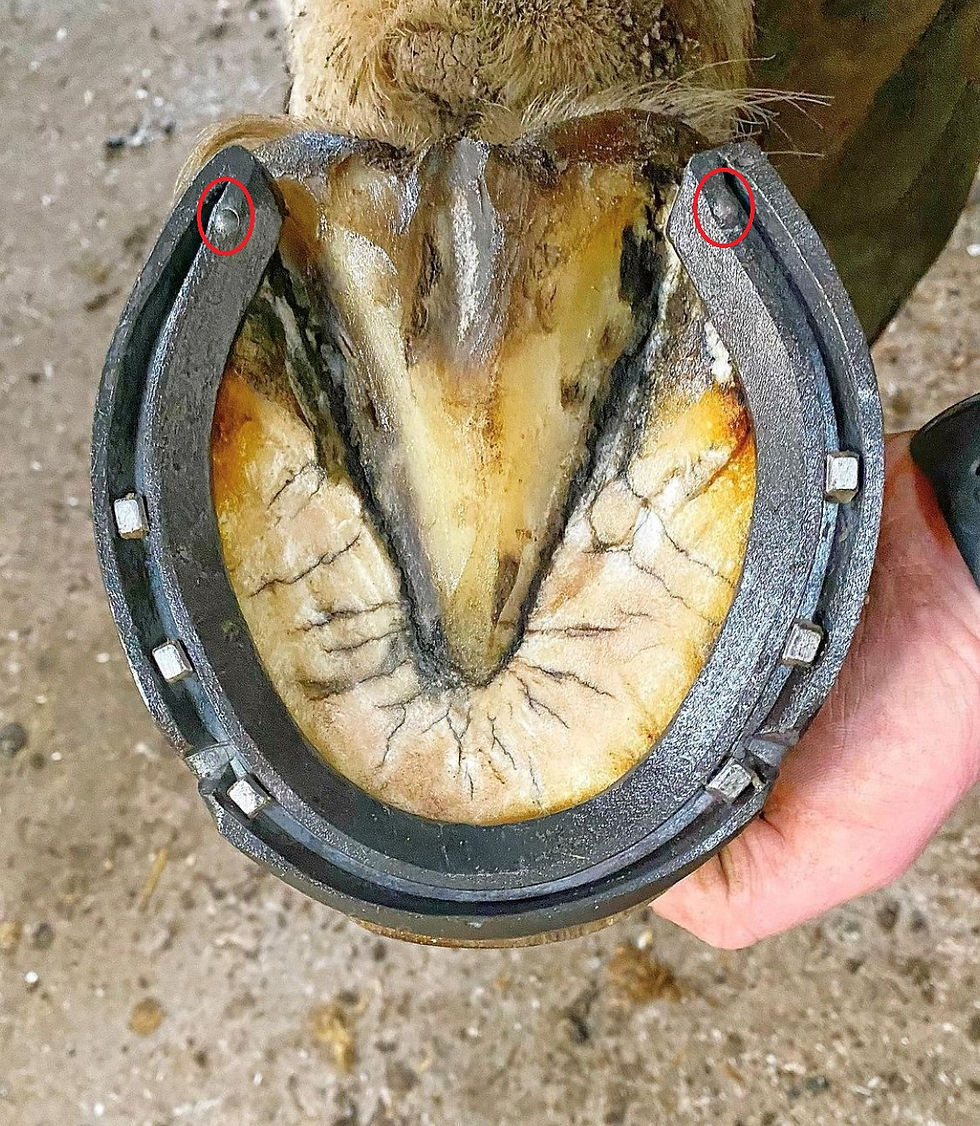
Stud holes are forged or drilled into the heels of the shoe, allowing for the insertion of removable studs when additional traction is required, such as during work on grass or soft ground (van Heel et al., 2005). The placement of stud holes must be precise, typically located symmetrically on either side of the heel to maintain balance. The farrier must also consider the size and type of stud used, as excessive traction can increase the risk of injury by preventing the natural rotation of the hoof during the stance phase.
In certain situations, the farrier may employ asymmetric shoeing, where the shoe is deliberately shaped or fitted to provide more support on one side of the hoof than the other (Weller et al., 2006). This can be achieved through careful forging and fitting, ensuring that the shoe aligns with the desired changes in limb loading and flight. Asymmetric shoeing must be approached with caution and should always be based on a clear understanding of the underlying biomechanics.
The use of lightweight materials such as aluminium shoes may also be considered, particularly in performance horses where reducing limb weight can improve the speed and efficiency of limb movement (Clayton, 2002). Aluminium shoes can be more easily modified and may reduce the inertia of the limb during the swing phase, potentially decreasing the likelihood of interference. However, they may offer less durability and traction compared to steel shoes, so their use must be carefully evaluated.
Ultimately, the success of any shoeing intervention for interference injuries depends on the farrier’s ability to accurately diagnose the underlying cause and to apply modifications that are both precise and appropriate (Back et al., 1995). Each shoe must be forged and fitted with attention to detail, ensuring that it complements the trimming of the hoof and supports the overall biomechanical objectives. Regular reassessment is essential, as changes in the horse’s condition, workload, or environment may necessitate further adjustments. Through a combination of skilled craftsmanship and informed decision making, the farrier can play a pivotal role in reducing interference and enhancing the horse’s soundness and performance.
Conclusion
In conclusion, interference injuries in horses require a comprehensive and methodical approach that integrates detailed assessment, an understanding of biomechanics, and precise farriery intervention (Wilson et al., 2001). By addressing the underlying causes and implementing appropriate trimming and shoeing strategies, the farrier can significantly reduce the incidence of interference and improve the overall performance and welfare of the horse (van Heel et al., 2005).
References
Back, W., Schamhardt, H.C. and Hartman, W. (1995) ‘The effect of toe angle on hoof kinematics’, Equine Veterinary Journal, 27(1), pp. 60–65.
Chateau, H., Degueurce, C., Jerbi, H. and Denoix, J.M. (2006) ‘Three-dimensional kinematics of the equine distal forelimb’, Equine Veterinary Journal, 38(3), pp. 230–236.
Chateau, H., Robin, D., Falala, S. and Pourcelot, P. (2009) ‘Effects of shoeing on traction and limb stability’, Equine Veterinary Journal Supplement, 41, pp. 68–72.
Clayton, H.M. (2002) ‘The role of the farrier in equine biomechanics’, Veterinary Clinics of North America: Equine Practice, 18(2), pp. 285–301.
Crevier-Denoix, N., Pourcelot, P., Jerbi, H. and Sanaa, M. (2001) ‘Biomechanical analysis of equine limb interference’, Journal of Biomechanics, 34(8), pp. 973–980.
Dyson, S.J., Murray, R. and Schramme, M. (2003) ‘Lameness associated with limb interference’, Equine Veterinary Education, 15(2), pp. 94–101.
Eliashar, E., McGuigan, M.P. and Wilson, A.M. (2004) ‘Relationship between conformation and movement’, Equine Veterinary Journal, 36(6), pp. 478–483.
Johnston, C. and Back, W. (2006) Equine Locomotion Research. Utrecht: Faculty of Veterinary Medicine.
Murray, R.C., Walters, J.M. and Snart, H. (2006) ‘Identification of risk factors for tripping’, Equine Veterinary Journal, 38(2), pp. 146–151.
Parkin, T.D.H., Clegg, P.D. and French, N.P. (2004) ‘Risk factors for injury in sport horses’, Equine Veterinary Journal, 36(5), pp. 411–416.
Roepstorff, L., Johnston, C. and Drevemo, S. (1999) ‘The effect of shoeing on equine locomotion’, Equine Veterinary Journal Supplement, 30, pp. 136–140.
van Heel, M.C.V., van Weeren, P.R. and Back, W. (2005) ‘Hoof conformation and pressure distribution’, Equine Veterinary Journal, 37(6), pp. 536–540.
Weller, R., Pfau, T. and Wilson, A.M. (2006) ‘The effect of conformation on locomotion’, Equine Veterinary Journal, 38(6), pp. 597–601.
Wilson, A.M., McGuigan, M.P. and Pardoe, C.H. (2001) ‘Biomechanics of the equine limb’, Proceedings of the Royal Society B, 268(1483), pp. 2387–2394.


Comments