

How to shoe racehorses

Updated: Dec 27, 2025
Introduction
The racehorse represents the pinnacle of equine athletic performance. The Thoroughbred breed is conditioned to operate at the limits of speed, stamina, and biomechanical efficiency. Farriery plays a fundamental role in enabling this performance, as the hoof is the primary interface between the horse and the ground, transmitting and dissipating enormous forces during high-speed locomotion (Clayton, 2016). Shoeing the racehorse therefore demands a far higher level of precision, adaptability, and understanding of equine biomechanics than routine shoeing. Errors in trimming, balance, or shoe selection may not only compromise performance but can contribute to injury, reduced career longevity, and catastrophic breakdowns (Dyson, 2002; Ross and Dyson, 2011).

The forces acting on the distal limb of the galloping racehorse can exceed several times body weight, particularly during the stance phase and at speed on firm racing surfaces (McGuigan and Wilson, 2003). The farrier must therefore consider both mechanical efficiency and biological tolerance when shoeing the racehorse, ensuring that hoof balance, protection, and traction are optimised without increasing stress on musculoskeletal structures (Parks, 2003).
Thoroughbred Breed Characteristics
The Thoroughbred has been selectively bred for speed and aerobic capacity, resulting in a conformation that is markedly different from many other equine breeds. Long limbs, light bone, refined distal anatomy, and relatively thin skin and horn are typical features (Hintz, 1980). While these characteristics are advantageous for speed and stride length, they also predispose the Thoroughbred to a range of foot-related challenges. The hoof capsule of the Thoroughbred is often shallow, narrow, and thin-walled, with a reduced sole depth when compared to native or sport horse breeds, increasing susceptibility to bruising and mechanical trauma (Redden, 2003).
The digital cushion and lateral cartilages in Thoroughbreds are frequently less robust due to early training and racing before full musculoskeletal maturity (Bowker et al., 2003). Reduced fibrocartilaginous development compromises shock absorption within the foot, placing greater strain on internal structures such as the navicular apparatus, deep digital flexor tendon, and distal interphalangeal joint (Dyson and Murray, 2007). Furthermore, Thoroughbreds often display long, sloping pasterns and relatively low hoof angles, which can influence breakover dynamics and increase tensile forces on the flexor tendons during high-speed locomotion (Clayton and Hobbs, 2017).
Metabolic efficiency and low body mass are advantageous for racing, but these traits are often associated with challenges in maintaining hoof horn quality. Many Thoroughbreds exhibit brittle or shelly horn, slow hoof growth, and difficulty retaining shoes under the intense stresses of training and competition (O’Grady and Poupard, 2003). The farrier must therefore work within the constraints imposed by the breed’s genetic makeup, balancing the need for protection, traction, and performance enhancement with preservation of hoof integrity.
Static and Dynamic Assessment of the Thoroughbred Hoof
Effective racehorse shoeing begins with comprehensive assessment, both static and dynamic. Static assessment involves examining the horse at rest, evaluating limb conformation, hoof capsule symmetry, and the relationship between the hoof and distal limb (Parks, 2003). The farrier should assess dorsal wall angle, heel height, medial-lateral balance, toe length, and alignment of the hoof-pastern axis. In Thoroughbreds, a broken-back hoof-pastern axis is common due to long toes and collapsed or underrun heels, often exacerbated by training surfaces and previous shoeing practices (Redden, 1997).
Learn more about the hoof pastern axis at the link below:
Sole depth and concavity should be assessed carefully, as aggressive trimming can rapidly compromise protection of the distal phalanx (Dyson, 2011). Horn quality, the presence of cracks, flares, or white line stretching, and any signs of inflammation or sensitivity must also be noted. Digital pulse strength and hoof temperature provide additional information regarding inflammatory processes or subclinical pathology (Ross and Dyson, 2011).
Dynamic assessment is equally critical, as many biomechanical faults only become apparent in motion. Observing the horse at walk and trot on a firm, level surface allows evaluation of limb flight, landing pattern, and breakover (Clayton, 2016). Many racehorses land laterally first in the forelimbs, increasing stress on the lateral wall and quarter (Wilson et al., 2016). Excessive toe-first landing may indicate heel pain or inadequate palmar support, while delayed breakover increases strain on the deep digital flexor tendon and navicular region (Dyson and Murray, 2007).
For racehorses, assessment should ideally extend to observation at canter or gallop under saddle, although this is not always practical. Trainer feedback regarding performance issues, surface preferences, and previous lameness history is invaluable. Modern farriery increasingly incorporates veterinary diagnostics such as radiography to assess distal phalanx position, sole depth, and joint alignment, enabling evidence-based trimming and shoe placement (Redden, 2003).
Learn more about radiography at the podcast link below:
Hoof Trimming Protocols
Trimming the racehorse hoof requires a conservative and disciplined approach, prioritising balance and preservation of horn over cosmetic appearance. The primary aim is to create a symmetrical, stable base that allows efficient loading and unloading of the limb while accommodating individual conformation and athletic demands (O’Grady, 2012). Excessive removal of sole or wall horn is contraindicated, as Thoroughbreds typically lack the depth and density of horn seen in heavier breeds.
The trim should begin with careful evaluation of hoof balance, addressing medial-lateral discrepancies while respecting natural asymmetry. Rather than forcing visual symmetry, the farrier should aim for functional balance, ensuring even loading during stance and efficient breakover during propulsion (Parks, 2003). Heel height should be preserved to support palmar structures, particularly in horses predisposed to underrun heels or low palmar angles. Excessive heel lowering increases strain on the flexor apparatus and risk of navicular pathology (Dyson and Murray, 2007).
Toe length is critical in racehorses, as excessive toe length delays breakover and increases the lever arm acting on the distal limb (Clayton and Hobbs, 2017). However, aggressive toe shortening through wall removal can weaken the hoof capsule and predispose to cracking. Controlled toe management through appropriate shoe placement and toe modification is therefore preferable.
Sole trimming should be minimal and limited to exfoliating loose horn. The frog should be preserved wherever possible due to its role in proprioception, shock absorption, and circulation (Bowker, 2003). In racehorses, the frog is frequently underdeveloped, and excessive trimming further compromises its function.
Types of Shoes Applied
Racehorse shoeing encompasses a wide range of shoe types selected to meet specific performance, surface, and individual hoof requirements. Lightweight steel and aluminium shoes are most commonly used, offering an optimal balance between durability and minimal distal limb mass (Stashak, 2002). Aluminium shoes are frequently applied in training and racing to reduce limb inertia and enhance stride efficiency, although they wear more rapidly and require more frequent replacement.
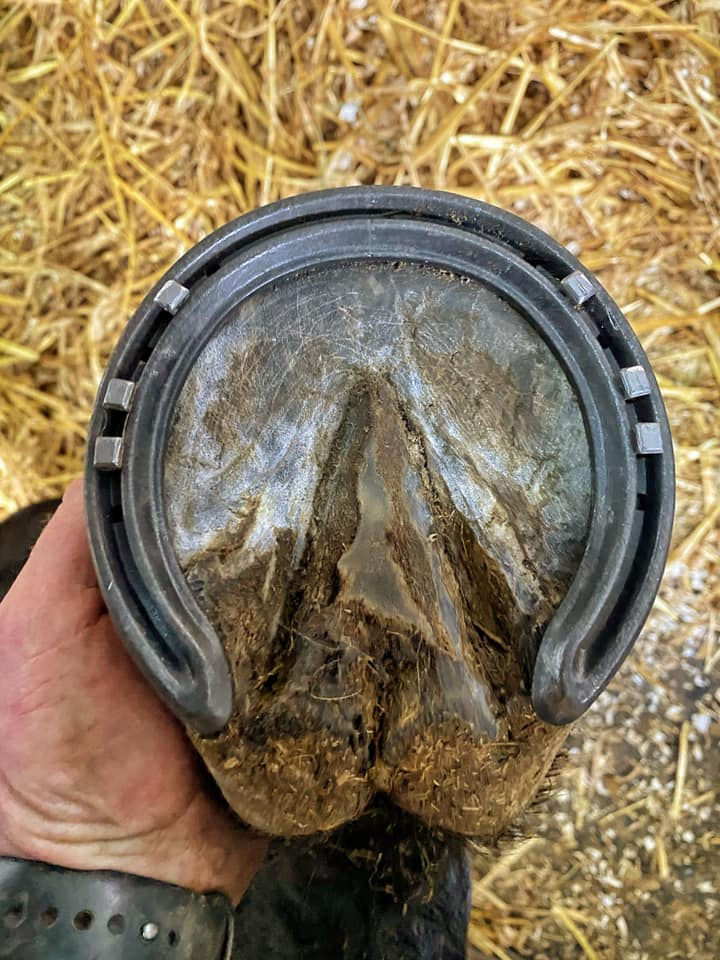
Shoes are commonly applied with a single toe clip to prevent shoe migration during gallop. Quarter-clipped hind shoes are often used, with the toe slightly rounded to reduce damage from overreaching (Parks, 2003). Toe modifications such as rolled or rockered toes are widely employed to enhance breakover and reduce strain on the distal limb, particularly in horses with long toes, low heels, or a history of tendon injury (O’Grady and Poupard, 2003).
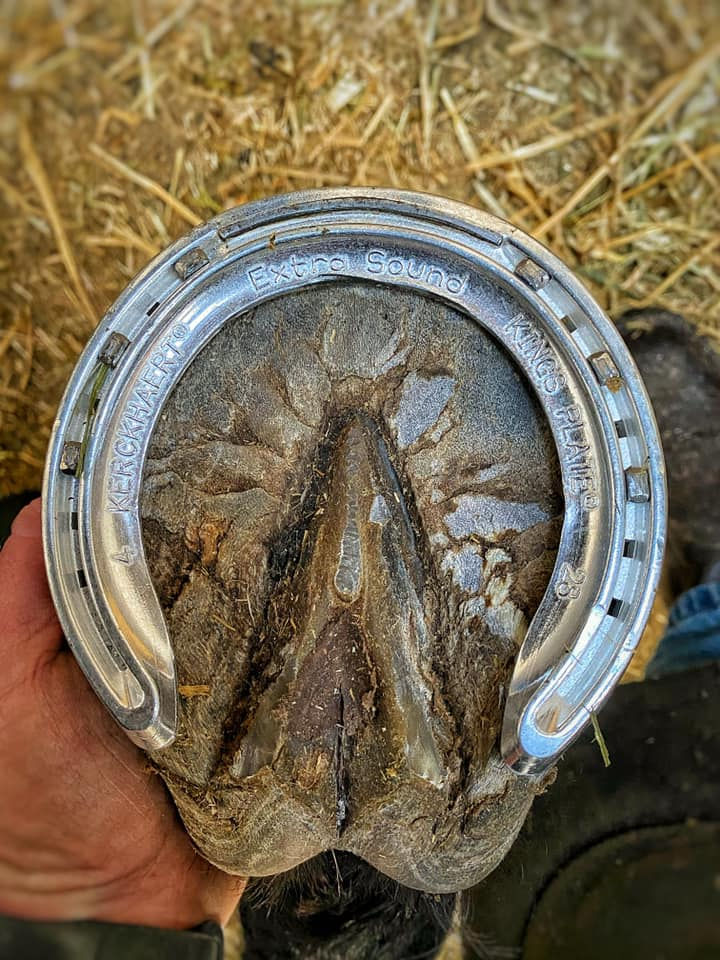
The shoes should be fitted as a perimeter fit to the outline of the hoof shape. This is to prevent shoe loss or any interference injuries with any of the limbs of the horse. The heels of the shoes are often tapered down at the same angle of the heel buttress providing further safety.

Heel support may be enhanced using lightweight frog support pads or wider-web shoes where necessary, although these must be applied judiciously to avoid altered limb flight or interference (Redden, 2003). Traction devices such as studs are selected based on surface conditions, balancing grip against the risk of excessive torsional stress.
Flat Racehorse Shoeing vs Jumps Racehorse Shoeing
While core principles remain consistent, significant differences exist between flat and National Hunt racehorse shoeing. Flat racehorses gallop at maximal speed over shorter distances, placing emphasis on minimal weight, rapid breakover, and efficient energy transfer (Clayton, 2016). Shoes for flat racing are therefore lighter, less complex, and frequently replaced to maintain optimal performance.
In contrast, jumps racehorses compete over longer distances at slower speeds across varied terrain. Greater emphasis is placed on durability, protection, and stability, with steel shoes commonly preferred (Ross and Dyson, 2011). Increased web width may be used to reduce sole bruising and support prolonged training loads.

Traction demands differ significantly, with National Hunt horses requiring greater grip during take-off and landing, particularly on soft or holding ground (Dyson, 2002). These horses are often older and may have cumulative musculoskeletal wear, requiring more supportive or remedial shoeing strategies such as graduated heels, rim pads, or modified breakover to prolong athletic longevity.

Common Issues with Thoroughbred Racehorse Feet
Thoroughbred racehorses are predisposed to a range of hoof-related issues exacerbated by intensive training and racing surfaces. Thin soles are common and frequently lead to bruising, sensitivity, and increased risk of distal phalanx injury (Redden, 1997). Management often requires wider-web shoes, sole protection, or modifications to training surfaces.
Hoof wall defects such as cracks, flares, and white line separation are frequently observed due to poor horn quality and high mechanical stress (O’Grady, 2012). These defects compromise shoe retention and increase infection risk, necessitating careful trimming and appropriate shoe design.
Collapsed or underrun heels are particularly prevalent in Thoroughbreds and alter hoof mechanics, increasing strain on the navicular apparatus and flexor tendons (Dyson and Murray, 2007). Early recognition and corrective shoeing are essential to prevent progression to chronic lameness.
Tendon and ligament injuries, although not primary hoof pathologies, are closely linked to farriery. Poor breakover, imbalance, or inadequate support increases loading on the superficial and deep digital flexor tendons and suspensory apparatus (Clayton and Hobbs, 2017). Farriery therefore plays a critical preventative role in managing injury risk.
Conclusion
Shoeing the racehorse is a highly specialised discipline requiring an advanced understanding of equine anatomy, biomechanics, and racing demands. The Thoroughbred’s physical characteristics necessitate a careful balance between performance optimisation and structural preservation. Through comprehensive assessment, conservative trimming, and appropriate shoe selection, the farrier plays a pivotal role in maintaining soundness and extending athletic careers.
Differences between flat and jumps racing further highlight the need for discipline-specific shoeing strategies. Awareness of common hoof pathologies allows the farrier to adopt a proactive approach, reducing injury risk through informed intervention. Ultimately, successful racehorse shoeing relies on collaboration between farrier, trainer, and veterinarian, ensuring both performance excellence and long-term welfare of the equine athlete.
References
Bowker, R.M. (2003) Contrasting structural morphologies of the equine digital cushion in young and mature horses. Equine Veterinary Journal, 35(6), pp. 612–618.
Bowker, R.M., Van Wulfen, K.K., Springer, S.E. and Linder, K.E. (2003) Functional anatomy of the equine digit. Veterinary Clinics of North America: Equine Practice, 19(2), pp. 285–307.
Clayton, H.M. (2016) The Dynamic Horse: A Biomechanical Guide to Equine Movement and Performance. 2nd edn. Sport Horse Publications.
Clayton, H.M. and Hobbs, S.J. (2017) The role of biomechanical analysis in equine locomotion research. Equine Veterinary Journal, 49(5), pp. 560–568.
Dyson, S.J. (2002) Diagnosis and Management of Lameness in the Horse. London: Saunders.
Dyson, S.J. (2011) Equine Lameness. Edinburgh: Elsevier.
Dyson, S.J. and Murray, R.C. (2007) Management of foot pain in the sport horse. Equine Veterinary Education, 19(1), pp. 34–42.
Hintz, H.F. (1980) Factors influencing growth and development of the horse. Journal of Animal Science, 51(3), pp. 651–660.
McGuigan, M.P. and Wilson, A.M. (2003) The effect of gait and digital flexor muscle activation on limb compliance in the horse. Journal of Experimental Biology, 206(8), pp. 1325–1336.
O’Grady, S.E. (2012) Farriery principles applied to the sport horse. Veterinary Clinics of North America: Equine Practice, 28(2), pp. 231–243.
O’Grady, S.E. and Poupard, D.A. (2003) Physiological horseshoeing: an overview. Equine Veterinary Education, 15(4), pp. 160–168.
Parks, A.H. (2003) Form and function of the equine digit. Veterinary Clinics of North America: Equine Practice, 19(2), pp. 285–307.
Redden, R.F. (1997) Shoeing the thin-soled horse. Proceedings of the American Association of Equine Practitioners, 43, pp. 354–360.
Redden, R.F. (2003) Clinical and radiographic assessment of the equine foot. Veterinary Clinics of North America: Equine Practice, 19(2), pp. 379–395.
Ross, M.W. and Dyson, S.J. (2011) Diagnosis and Management of Lameness in the Horse. 2nd edn. St Louis: Elsevier Saunders.
Stashak, T.S. (2002) Adams’ Lameness in Horses. 5th edn. Philadelphia: Lippincott Williams & Wilkins.
Wilson, A.M., McGuigan, M.P., Su, A. and van den Bogert, A.J. (2016) Horses damp the spring in their step. Nature, 414, pp. 895–899.


Comments